
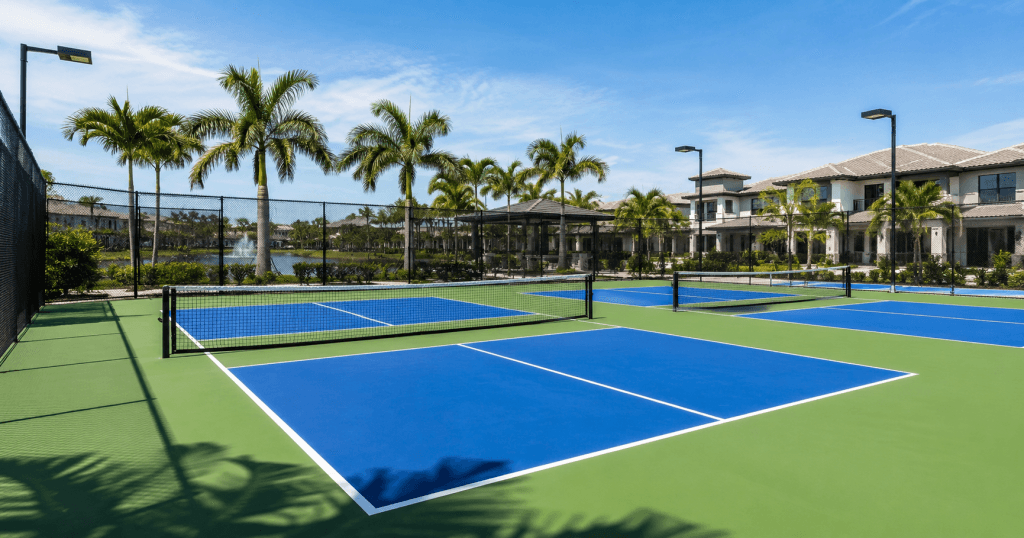
Pickleball has become one of the fastest-growing sports in the United States, and demand for dedicated courts continues to grow throughout Florida. Homeowners are transforming backyards into private playing spaces, while HOAs, schools, parks, sports clubs, and commercial facilities are investing in new courts to meet the increasing popularity of the game.
One of the first questions every property owner asks is:
“How much does it cost to build a pickleball court?”
The honest answer is that there isn’t a one-size-fits-all price.
Every project is unique, and the final investment depends on several factors, including site preparation, drainage, court dimensions, the type of base, surfacing system, fencing, lighting, and additional amenities. Even two courts that appear identical can have very different construction costs because of differences in the property itself.
A professionally constructed pickleball court is much more than a painted playing surface. It’s a long-term investment designed to deliver consistent play, withstand years of outdoor use, and provide lasting value. When built correctly, it can become a centerpiece for recreation, community engagement, fitness, and even property appeal.
For property owners in Florida, thoughtful planning is especially important. The state’s heavy rainfall, high humidity, intense UV exposure, and varying soil conditions all influence how a court should be designed and constructed. Choosing the right materials and construction methods from the start can help reduce future maintenance costs and extend the life of your investment.
Whether you’re planning a backyard pickleball court, developing a new community amenity, or constructing multiple courts for a commercial facility, understanding what drives construction costs will help you make informed decisions before work begins.
In this guide, you’ll learn what influences the cost of building a pickleball court in 2026, compare common construction options, understand where your investment goes, and discover how to choose the right contractor for a court that’s built to perform for years to come.
Key Takeaways
- Every pickleball court project is unique, with costs influenced by site conditions, materials, and project scope.
- Site preparation, drainage, and the court base often have the greatest impact on the total investment.
- Quality construction typically reduces future maintenance and extends the lifespan of the court.
- Florida’s climate requires construction methods designed to handle heavy rainfall, humidity, and prolonged UV exposure.
- Working with an experienced pickleball court contractor helps ensure your court is built for performance, safety, and long-term durability.
Quick Answer: What Does It Cost to Build a Pickleball Court?
Every pickleball court is custom-built to suit the property’s conditions and the owner’s goals, which is why there isn’t a universal price.
The overall investment depends on questions such as:
- Does the site require excavation or grading?
- Will drainage improvements be needed?
- Is an asphalt or concrete base more appropriate?
- Will the court include fencing, lighting, or custom branding?
- Is it a single residential court or part of a larger sports facility?
- These decisions all influence the final construction cost.
| Project Type | Typical Investment Approach |
| Backyard Residential Court | Customized based on site conditions and selected features. |
| HOA & Community Court | Designed around anticipated usage, amenities, and durability requirements. |
| School or Park Court | Based on project specifications, accessibility requirements, and number of courts. |
| Commercial or Multi-Court Facility | Individually quoted according to project scope and long-term operational needs. |
Rather than comparing projects based solely on the initial construction price, it’s more valuable to consider the total cost of ownership.
A properly designed and professionally constructed court is more likely to provide consistent playability, require fewer repairs, and deliver lower long-term maintenance costs than a court built using lower-quality materials or shortcuts during installation.
💡 Expert Tip: When comparing proposals, don’t simply ask, “Which quote is the cheapest?” Ask “What’s included?” Proper excavation, drainage, base preparation, premium sports surfacing, and warranty coverage all contribute to the long-term value of your investment.
What Affects the Cost of Building a Pickleball Court?
No two pickleball court construction projects are exactly alike.
Before preparing a proposal, an experienced contractor will evaluate the property, understand how the court will be used, and identify any site conditions that may affect construction. This planning process helps ensure the court performs as expected while minimizing unexpected costs later.
Below are the primary factors that influence the total investment.
Site Preparation
Every high-quality sports court begins with a properly prepared foundation.
Before construction starts, contractors evaluate the property’s slope, soil conditions, drainage patterns, existing vegetation, and accessibility. If excavation, grading, tree removal, soil stabilization, or imported fill material is required, these activities become part of the overall construction process.
Properties with relatively level ground and stable soil generally require less preparation than sites with poor drainage, uneven terrain, or unstable subgrade conditions.
While site preparation isn’t the most visible part of a project, it’s often one of the most important. A well-prepared foundation supports every layer above it and helps reduce the risk of settlement, surface movement, and premature cracking over time.
Drainage Requirements
One of the most common causes of premature sports court deterioration isn’t the surface coating. It’s poor drainage.
If rainwater isn’t directed away from the court effectively, moisture can weaken the foundation, create standing water, and shorten the lifespan of the playing surface. These issues not only affect appearance but can also impact player safety and increase future maintenance costs.
This is particularly important in Florida, where frequent storms and heavy rainfall place additional demands on outdoor sports facilities.
A properly designed drainage system helps rainwater move away from the court efficiently, allowing the surface to dry more quickly and reducing the likelihood of long-term structural issues.
📍 Florida Insight: In our climate, drainage shouldn’t be viewed as an optional upgrade. It’s a fundamental part of building a sports court that performs consistently and remains in excellent condition for years.
Court Base Construction
The court base forms the structural foundation of the entire playing surface and plays a significant role in durability, playability, and maintenance.
Most professional pickleball courts are built on either an asphalt or concrete base. Choosing the right option depends on several factors, including anticipated usage, property conditions, long-term maintenance goals, and overall project requirements.
A properly engineered base provides consistent ball bounce, supports the acrylic surface system, and helps maintain a smooth, stable playing surface season after season.
Because the base supports every other component of the court, investing in quality construction at this stage often delivers the greatest long-term value.
Surface System
The surface system is what players experience every time they step onto the court.
Professional acrylic sports coatings are engineered to deliver reliable traction, consistent ball response, UV resistance, and long-term durability while maintaining an attractive appearance. Many sports surfacing products are also developed and tested in accordance with recognized ASTM International standards for material performance and quality.
Depending on the intended use of the court, cushioned surface systems may also be recommended. These systems help reduce stress on players’ joints during extended play while maintaining excellent playing characteristics.
Choosing the right surface isn’t simply about color or appearance. It’s about selecting a system designed to perform well in Florida’s climate while balancing maintenance, durability, and player comfort.
💡 Expert Tip: The surface coating contributes to both the appearance and performance of your court. Choosing a professional sports surfacing system designed for Florida’s climate can improve traction, durability, and long-term color retention.
Fencing, Lighting & Court Accessories
Many pickleball court projects include features that improve safety, functionality, and the overall player experience.
Popular additions include:
- Perimeter fencing
- LED sports lighting
- Professional net systems
- Windscreens
- Benches and seating
- Shade structures
- Custom court colors
- Logos and branding
While these upgrades increase the initial investment, they often improve usability, extend playing hours, and enhance the overall value of the finished facility, especially for schools, parks, HOAs, sports clubs, and commercial properties.
Backyard vs. Commercial Pickleball Court Construction
Not every pickleball court is built for the same purpose, and that’s one of the biggest reasons construction costs can vary so much from one project to another.
A backyard pickleball court designed for family recreation has very different requirements than a court built for an HOA, school, public park, sports club, or commercial facility.
Residential projects often focus on creating an enjoyable playing experience while making the best use of available space and budget. Community and commercial projects, however, are designed to accommodate significantly more players, heavier daily use, and stricter construction standards.
For example, a homeowner may only need a single court with basic fencing and lighting, while a sports complex may require multiple courts, ADA accessibility, spectator areas, walkways, drainage infrastructure, and premium surfacing systems.
Understanding these differences early helps property owners budget more accurately and select the right construction approach for their needs.
| Feature | Residential Court | Community / Commercial Court |
| Primary Users | Family & Friends | Public, Schools, Clubs & HOAs |
| Expected Traffic | Low to Moderate | High Daily Use |
| Surface System | Standard Acrylic | Premium Acrylic or Cushioned |
| Lighting | Optional | Frequently Included |
| Fencing | Residential Grade | Commercial Grade |
| Amenities | Basic | Seating, Windscreens, Signage & More |
| Maintenance | Occasional | Planned Maintenance Program |
💡 Expert Tip: If your court is expected to serve dozens of players every day, investing in higher-quality construction materials usually costs less over the court’s lifetime than choosing the lowest upfront bid.
Asphalt vs. Concrete: Which Base Is Right for Your Court?
One of the most important decisions during pickleball court construction happens long before the playing surface is installed.
It starts with the foundation.
The court base directly affects ball bounce, player comfort, drainage performance, long-term durability, and future maintenance requirements. Even the highest-quality acrylic surface system cannot perform properly if it’s installed over a poorly constructed base.
Most professional pickleball courts are built using either asphalt or concrete. Neither material is automatically better. The right choice depends on how the court will be used, the site’s conditions, maintenance expectations, and your long-term budget.
| Factor | Asphalt | Concrete |
| Initial Investment | Lower | Higher |
| Installation Speed | Faster | Slower |
| Long-Term Stability | Excellent | Excellent |
| Future Repairs | Easier | Less Frequent |
| Ideal Applications | Residential & Community Courts | Schools, Clubs & Commercial Facilities |
Asphalt
Asphalt remains one of the most common choices for outdoor pickleball courts because it offers an excellent balance between affordability and performance.
When installed over a properly engineered base, asphalt provides reliable ball response, comfortable play, and a durable surface for acrylic sports coatings.
Like any paving material, asphalt naturally expands and contracts with seasonal temperature changes. Over time, resurfacing may be required to maintain optimal performance, particularly if drainage or base preparation wasn’t completed correctly.
Asphalt is often a practical choice for homeowners, HOAs, and community recreation areas looking for outstanding value without compromising playability.
Concrete
Concrete generally requires a higher initial investment but is widely recognized for its exceptional structural stability and long service life.
Because concrete experiences less movement over time, it’s frequently selected for projects expected to receive heavy, consistent use, such as schools, municipalities, and commercial sports facilities.
For property owners planning a premium sports court designed for decades of service, concrete often provides excellent long-term value despite the higher upfront cost.
💡 Expert Tip: Choosing between asphalt and concrete shouldn’t be based on price alone. An experienced contractor will evaluate your soil conditions, drainage requirements, expected usage, and long-term maintenance goals before recommending the most suitable option.
Hidden Costs That Many Property Owners Overlook
When people budget for a pickleball court, they often focus on the visible features, such as surface colors, fencing, nets, and lighting.
However, some of the most important investments are the ones you’ll never see once construction is complete.
Depending on your property, additional work may include:
- Excavation and grading
- Tree or root removal
- Soil stabilization
- Drainage improvements
- Utility connections for sports lighting
- Accessibility improvements
- Retaining walls
- Landscape restoration
- Court logos or custom branding
- Future resurfacing and preventative maintenance
These items shouldn’t be viewed as unexpected expenses. Instead, they’re investments that protect the court’s structural integrity and help reduce future repair costs.
One of the most common mistakes property owners make is reducing the budget for site preparation to lower the initial construction cost. Unfortunately, that decision often leads to drainage problems, surface movement, and expensive repairs years later.
DIY vs. Hiring a Professional Pickleball Court Contractor
With countless online tutorials available today, it’s understandable that some homeowners wonder whether building a pickleball court themselves could save money.
For small projects such as installing a portable net, repainting faded court lines, or performing routine cleaning, DIY can certainly be a practical option.
Constructing an entirely new sports court, however, is a much more specialized process.
Professional court builders evaluate grading, drainage, soil conditions, slope, base preparation, surface systems, and long-term performance before construction begins. These factors determine how the court will perform years after installation, not just how it looks on completion day.
A court that appears perfectly level during construction may later develop standing water, low spots, cracking, or premature surface wear if the foundation wasn’t properly engineered.
DIY projects are generally suitable for:
- Installing portable net systems
- Routine cleaning
- Minor maintenance
- Touch-up painting
Professional construction is recommended for:
- New court construction
- Excavation and grading
- Drainage installation
- Asphalt or concrete base construction
- Acrylic sports surfacing
- Multi-court facilities
- HOA, school, park, and commercial developments
A professionally constructed pickleball court is designed not only to look great but to provide years of reliable performance with minimal long-term maintenance.
How to Choose the Right Pickleball Court Contractor
Choosing the right contractor is one of the most important decisions you’ll make during the entire project. Reputable contractors also stay informed about industry best practices published by organizations such as the American Sports Builders Association (ASBA).
While price is always an important consideration, experience, construction quality, and long-term support often have a much greater impact on the value of your investment.
When comparing contractors, ask questions such as:
- Do they specialize in sports court construction?
- Will they perform a detailed site evaluation before quoting?
- Do they explain how drainage affects long-term performance?
- What surface systems do they recommend, and why?
- Can they share examples of similar completed projects?
- Do they offer maintenance or resurfacing services after construction?
The right contractor won’t simply build a court. They’ll help you understand the decisions that affect its performance for years to come.
Why Property Owners Across Florida Choose Court Project
A professionally constructed pickleball court should provide years of reliable play, withstand Florida’s challenging climate, and require only routine maintenance when built correctly.
At Court Project, we work with homeowners, HOAs, schools, municipalities, sports clubs, and commercial property owners across Florida to design and build sports courts that combine performance, durability, and long-term value.
From the initial consultation and site evaluation through final striping and finishing, every project is planned around the property’s unique requirements and the client’s goals.
Whether you’re building a private backyard court or developing a multi-court sports complex, our team is committed to delivering craftsmanship, attention to detail, and a finished court that’s built to perform for years to come.
Frequently Asked Questions
According to the official pickleball court dimensions, a regulation pickleball court measures 20 feet by 44 feet, with additional runoff space recommended for safe play.
Do I need planning permission or permits?
Permit requirements vary depending on your municipality, property type, and the scope of the project. An experienced contractor can help determine what approvals may be required before construction begins.
Can an existing tennis court be converted into a pickleball court?
In many cases, yes. Existing tennis courts can often be resurfaced and restriped for pickleball if the underlying court remains structurally sound.
Which surface performs best in Florida?
Professional acrylic sports surface systems are among the most popular choices because they provide excellent traction, UV resistance, durability, and consistent ball response in Florida’s climate.
How long does a pickleball court last?
With proper construction, routine maintenance, and periodic resurfacing, a professionally built pickleball court can provide many years of reliable performance.
How long does construction usually take?
With proper construction, routine maintenance, and periodic resurfacing, a professionally built pickleball court can provide many years of reliable performance.
Ready to Build Your Pickleball Court?
Whether you’re planning a backyard pickleball court, upgrading an HOA amenity, or developing a commercial sports facility, the right planning and construction approach can make all the difference.
At Court Project, we help homeowners, schools, municipalities, parks, and commercial property owners throughout Florida design and build high-quality sports courts that are made to last.
Contact our team today to schedule a consultation and receive a customized project estimate based on your property, goals, and budget.